

Artificial intelligence in the Philippines has already gone beyond the conceptual stage. It has already begun to influence the lives of Filipinos in various ways, ranging from schooling and studies to the workplace of various organizations. In fact, artificial intelligence has been considered a disruptive technology, as it also presents challenges in addition to the opportunities it may create for different people.
This article examines the experience of AI in the Philippines, synthesizing data, perspectives, case studies, and projections.
The State of AI Philippines Today
The Philippines has long been a mobile-first nation and a highly interconnected, socially oriented country. Because of this, this is one of the best places to apply AI. Public interest in AI in the Philippines shows that people in this country are eager to learn about and adapt to artificial intelligence.
Recent statistics of Public First (ND) show that:
- 50% of Filipinos use AI tools at least weekly.
- 46% believe it will benefit their country.
- 50% are optimistic with regard to individual benefits from AI.
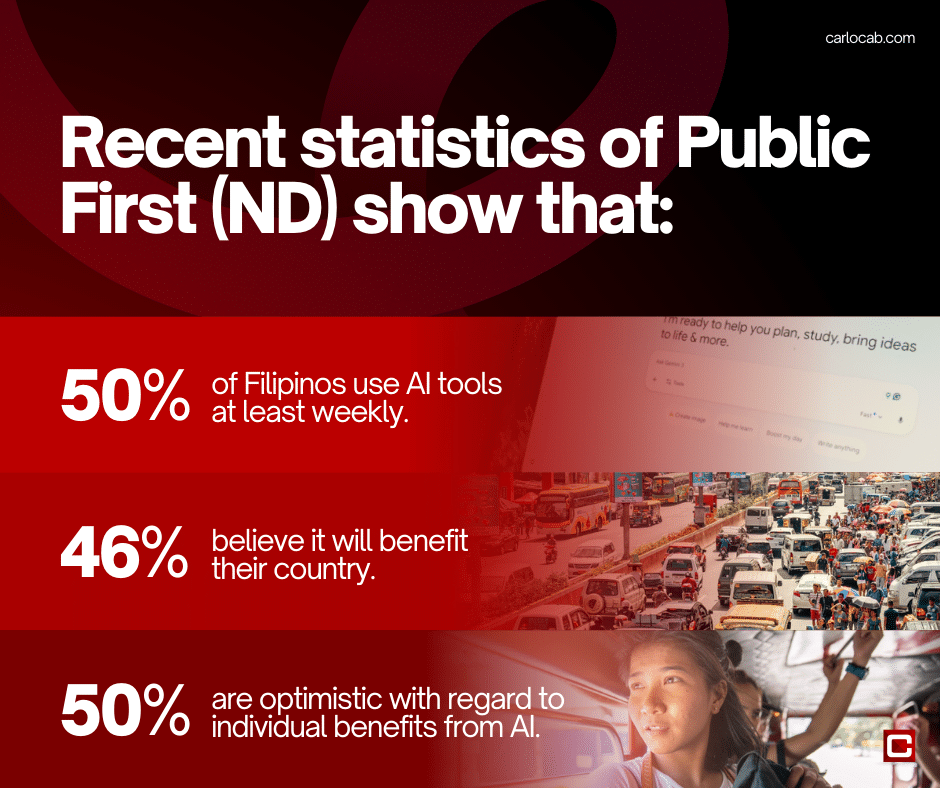
These data illustrate how AI is more than just a technology trend, and it is an ever-growing, evolving, and increasingly influential force affecting life, learning, and the marketplace.
Generative AI in the Philippines
Generative AI has many applications, ranging from education and business to content generation for platforms like “ChatGPT.”
The Philippines is the sixth-largest user of ChatGPT in the world, with 46% of its internet users using the platform, compared with the average of 26% in other countries, as reported by Philstar. 63% of students have been using generative AI tools to author, translate, or perform their duties at work and school.
The emergence of Generative AI is transforming the way people learn and get things done. With the adoption of Generative AI in the country, it is clear that the technology is already beyond the exploratory phase.
Why Does AI Matter in the Philippines?
AI adoption is driven by measurable factors, and the Philippines is not exempt. In fact, worldwide, AI is associated with increased productivity, innovation, and growth. A Microsoft spokesperson states:
- The primary advantage associated with AI implementation is task automation.
- Over 70% of the executives surveyed think that AI will lead to the creation of new types of jobs that are not presently known
- Security is still the biggest challenge to the widespread implementation of artificial intelligence.
These are certainly very context-specific trends in the Philippines. AI is both an enabler of efficiency and a challenge to the readiness of institutions and businesses.
Artificial Intelligence Improves Workplace Productivity
AI significantly improves workplace productivity by automating both routine and administrative tasks. According to one estimate from Public First (n.d.), the average worker would save 3 hours a week with the help of AI, freeing them to take on higher value-added work. These time savings would also yield a raise of over 6% in wages, again demonstrating that AI has economic value beyond its value as a new technology.
AI enables Filipino professionals to focus on:
- Strategic planning, whereby the employees would be able to analyze the trends and come up with strategic solutions instead of wasting hours in gathering data.
- Data analysis can allow the workforce to extract vital insights into complex data for smarter and faster decision-making.
- Creative problem-solving allows teams to funnel their time and energy into innovating, product development, and process improvements, instead of investing time in routine tasks.
By saving time on mundane activities, artificial intelligence supplements human cognition, amplifying human capabilities and productivity.
The Role of Emerging Technology as a Competitive Business Tool in the Philippines
Philippine businesses are now realizing the importance of AI as a strategy and not as a technology. With the capabilities of AI analytics, businesses can minimize risks as well as promote efficiency and innovation. Such applications can be applied in businesses for the following reasons:
- Fraud detection in financial organizations involves the use of AI algorithms to detect anomalies in transactions in real time.
- Predictive modeling for logistics to identify the potential problems that might arise in the supply chain, so that preventive actions can be taken by the organization if there is are chance of bottleneck formation.
- Monitoring of the industrial equipment in a manner that ensures no downtimes occur, where the use of algorithms can predict equipment failure in advance in order to ensure uninterrupted operations and reduce maintenance costs (Manila Standard, 2024).
From the above illustrations, the application of AI technology creates a business advantage that results from timely and cost-effective decision-making.
Types of AI in the Philippines
AI in the Philippines has been instituted in various forms, each with different functions and advantages:
Generative AI
is also used in research tools like ChatGPT, which help users with their research, creation of content, and translation of languages. Its tremendous usage in educational and professional fields also underlines the integration of AI into daily routines.
Predictive AI
This is used to predict trends by analyzing data from historical and real-time sources, thereby enabling the optimization of operations and the identification of imminent risks. Predictive AI has wide applications, including financial analytics, logistics, and retail.
Automation AI
It streamlines routine activities in offices and BPOs, enabling workers to focus on more strategic and creative functions while enhancing operational efficiency.
Industrial Robotics and AI: The system controls the manufacturing process, predicts the failure of the equipment, improves production efficiency, and uses AI in industries in logistics, manufacturing, and energy.
AI in Education
Adaptive learning environments assist in personalizing instruction, and AI grading and tutoring systems improve learning outcomes.
Chatterbot Applications
In the banking and e-commerce industries, chatbot technology has helped customer service improve delivery times and enhance the customer experience in BPOs. (Manila Standard, 2024; Philstar, 2025)
Each one has certain specific tasks, but collectively, they are redefining how Filipinos work, learn, and interact with technology to leverage the efficiencies of the human and organizational capital.
Artificial Intelligence and the Philippine Economy
AI could have a significant impact on the Philippines’ macroeconomy. In fact, studies reported that the various ways through which AI adoption could account for as much as 12 percent of the nation’s GDP, with economic benefits estimated to be about 92 billion dollars by the year 2025.
These gains come because of:
The output would be greatly enhanced with AI, as more routine-type work could be serviced, freeing up the professional’s time and allowing for more competent decision-making.
Improve operational efficiency using AI to reduce disruption to business operations.
More sophisticated strategic planning, informed by wisdom gained through AI analytical solutions. Sectors that will most benefit from the adoption of AI would be manufacturing, logistics, retail, BPO, and education. The adoption of AI enables the Philippines to improve its standing in the knowledge-driven global economy.
AI Transforms the Filipino Workforce
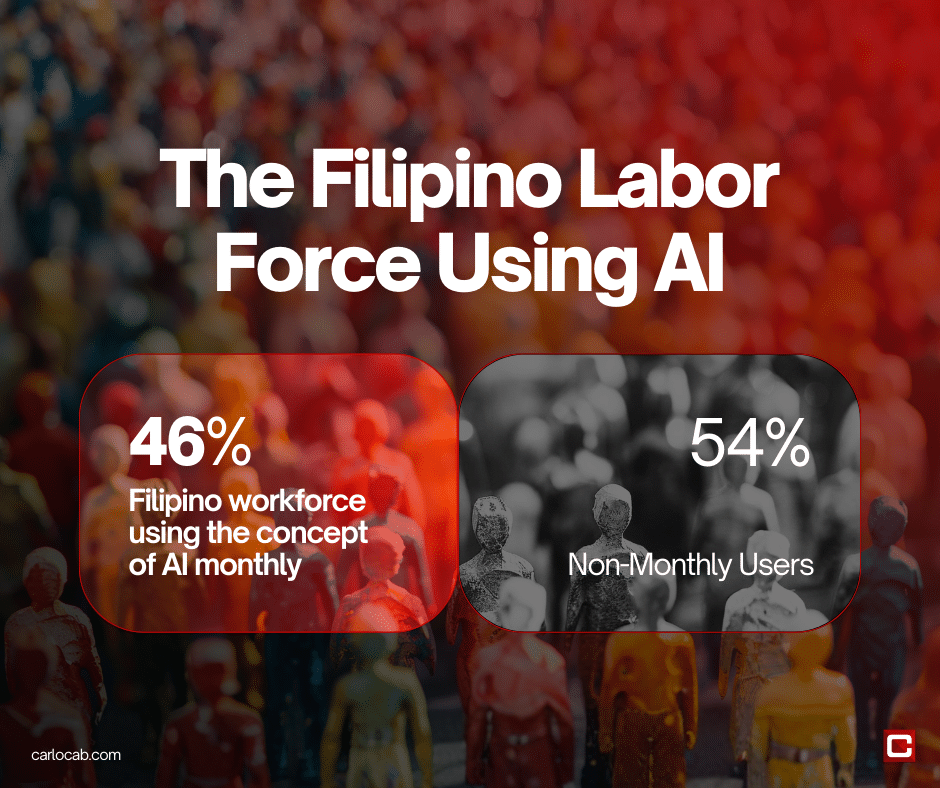
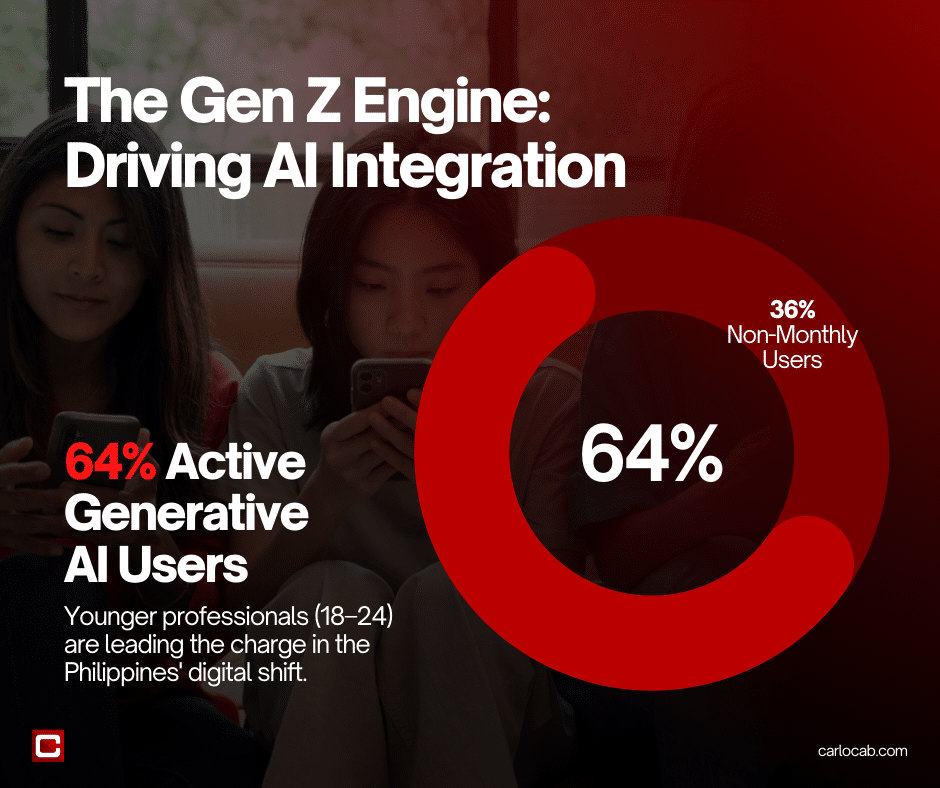
The labor force is currently undergoing a shift in roles and responsibilities due to the integration of AI technology. The research studies undertaken by SunStar in 2024 indicate that 46% of the Filipino labor market uses the concept of generative AI technology on a monthly basis; 64% of the younger generation of professionals between 18-24 years of age continue to move the concept forward.
Although it reduces employment, it equally alters job character through automation of job processes, and job creation in areas such as:
- Machine Learning and Prompt Engineering: Response Development by Workers.
- Data Auditing and Compliance: For example, the output produced by an artificial intelligence algorithm must satisfy a particular standard.
AI application regulation from an ethical standpoint. These roles not only emphasize the importance of reskilling and upskilling programs in cultivating skills that complement human intelligence, rather than counter them (3DVF, 2025; SunStar, 2024), but also underscore the significance of technological development.
Artificial Intelligence and Digital Divide in the Philippines
While there are many positive effects associated with the implementation of AI, there can be negative consequences related to the increased divide brought about by technology. The digital divide can be defined as the lack of internet access or internet-capable devices for AI processing, which can be the case in communities in the Philippines (Philstar, 2025).
Below are the steps that need to be followed in order to address:
- Connectivity investments to ensure the stability and ubiquity of internet access.
- Energy infrastructure upgrade and digital continuity.
- Initiatives for digital literacy, and initiatives for understanding and appropriate utilization of AI tools.
A researcher from the Philippine Institute for Development Studies, Philip Arnold Tuaño, suggests that “AI is a powerful tool and a threat” that may appear in the future “if structural issues are not addressed” (Philstar, 2025).
Strategy of the Philippine Government Regarding AI
Realizing the power of AI, the Philippine government has embarked on programs that ensure its safe and responsible use by its citizens:
- The National AI Roadmap points out the importance of developing the infrastructure, enhancing skills, cooperation between the public and private sectors, and ensuring the governance of AI (Philstar, 2025).
- Its public program focuses on upskilling 1 million “AI-ready workers by 2028” and promoting “AI literacy among Filipinos” (AmCham Philippines, 2025).
- Ethical standards ensure that the implementation of AI is responsible, just, and transparent. In this way, AI is not used for unethical purposes.
The government plays a crucial part in making sure that the AI technology serves as a symbiotic engine, as it ought to, and does not add to inequality.
Pillars of Responsible Usage of AI
Some of the key considerations for responsible scaling of Artificial Intelligence include:
- Data security: It refers to the assurance that confidential information is not at risk of leakage or misuse.
- Trustworthy AI: supporting justice, clarity, and accountability in AI development.
- Public Trust: Encourages responsible usage and adoption of AI.
Security, however, remains one of the biggest hurdles to AI adoption, both in corporate investment and in public acceptance. Being proactive about these challenges will make AI a source of positive, sustainable, as well as economic benefits.
Philippines in the Global Landscape of AI
Adoption of AI is set to increase exponentially worldwide. With its high level of engagement in digital platforms, a populace interested in adopting AI, and a developing startup scene, the Philippines finds itself in a more favorable environment in terms of competing with other nations.
In its bid to be a leader in its region in AI adoption, however, investment in education and innovation would have to shift from being a consumer to becoming a producer and developer of AI itself.
The Future of AI in the Philippines
For a healthy and sustainable artificial intelligence ecosystem in the Philippines, the following must be involved:
- Developing national AI literacy and skills.
- Readying the Workforce for the Jobs of the Future.
- Promoting local development in AI and start-ups in order to address local needs using local AI solutions.
- Enhancing the structures that support information governance and ethical considerations, and applying AI responsibly and ethically.
- Enable inclusive access, making sure all people benefit.
Consciously leveraging AI, it can act as an engine for inclusive growth. The process occurs by virtue of augmenting productivity and jobs, as well as engaging students, workers, and companies.
FAQs
What are the examples of AI in the Philippines?
Applications of artificial intelligence include generative tools such as ChatGPT, customer support chatbots, predictive analytics solutions in finance and logistics, educational tools in artificial intelligence, and robotic applications.
What are the negative consequences of AI in the Philippines?
Artificial intelligence could increase risks to data privacy, exacerbate the digital divide, pose ethical challenges, and affect workers who must reskill.
Is Artificial Intelligence a threat to employment in the Philippines?
AI amends and transforms the task. Automated tasks are repetitive, whereas new tasks are about the development, auditing, and ethics of artificial intelligence systems. Upskilling and Reskilling are needed.
AI in the Philippines Unlocks a Smarter Future
The Philippines’ experience with AI presents both opportunities and challenges, as well as change. There is adoption, optimism, and economic promise. Yet, there are looming issues for the Philippines regarding infrastructure, readiness, governance, and ethics. Through effective management, AI has the potential to drive growth, increase productivity and job opportunities, and empower society in the Philippines.
References:
3DVF. (2025). In 6 months everything changes: A Microsoft executive describes what artificial intelligence will really look like in 6 years. Retrieved from: https://3dvf.com/en/in-6-months-everything-changes-a-microsoft-executive-describes-what-artificial-intelligence-will-really-look-like-in-6-years/
AmCham Philippines. (2025). Digital Nation: Preparing Filipino workers for AI and emerging technologies. Retrieved from: https://amchamphilippines.com/wp-content/uploads/2025/07/Digital-Nation.pdf?utm_source
Manila Standard. (2024). Shaping Philippines’ digital future with AI and advanced analytics. Retrieved from: https://manilastandard.net/tech/314682916/shaping-philippines-digital-future-with-ai-and-advanced-analytics.html
Philstar. (2025). AI may worsen Philippines’ digital divide, experts say. Retrieved from: https://www.philstar.com/headlines/2025/10/03/2477159/ai-may-worsen-philippines-digital-divide-experts
Philstar. (2025). Global AI surge demands policy readiness, boost in Philippines data industry. Retrieved from: https://www.philstar.com/business/2025/12/19/2495495/global-ai-surge-demands-policy-readiness-boost-philippines-data-industry
Public First. (n.d.). The Philippines AI opportunity. Retrieved from: https://aiopportunity.publicfirst.co/handouts/The_Philippines_AI_opportunity.pdf
SunStar Philippines. (2024). 46% of Filipino workers now using GenAI monthly. Retrieved from: https://www.sunstar.com.ph/cebu/46-of-filipino-workers-now-using-genai-monthly
TrueLogic Online Solutions. (n.d.). Episode 105 recap: Adoption of AI in the Philippines. Retrieved from: https://www.truelogic.com.ph/blog/truelogic-episode-105-recap-adoption-of-ai-in-the-philippines/